
 Academy

01Learn, Do, Fly
A medium-bank turn is the first turn where the airplane starts to ask for something back. At about 30° of bank you need a little back pressure to hold altitude, and rudder to keep the turn coordinated. This lesson teaches that handful of inputs in a calm setting.
You will fly two turns: 180° to the left, then 180° to the right, over the red rocks near Sedona. The whole flight takes two to three minutes. Use small, smooth inputs on your Thrustmaster yoke or stick.
The technique follows the FAA Airplane Flying Handbook, and the standards are written like the ACS so you can measure yourself against the real thing.
Learn
- The briefing: what a medium-bank turn is and the four inputs that make it work.
- The standard you will be scored against.
Do
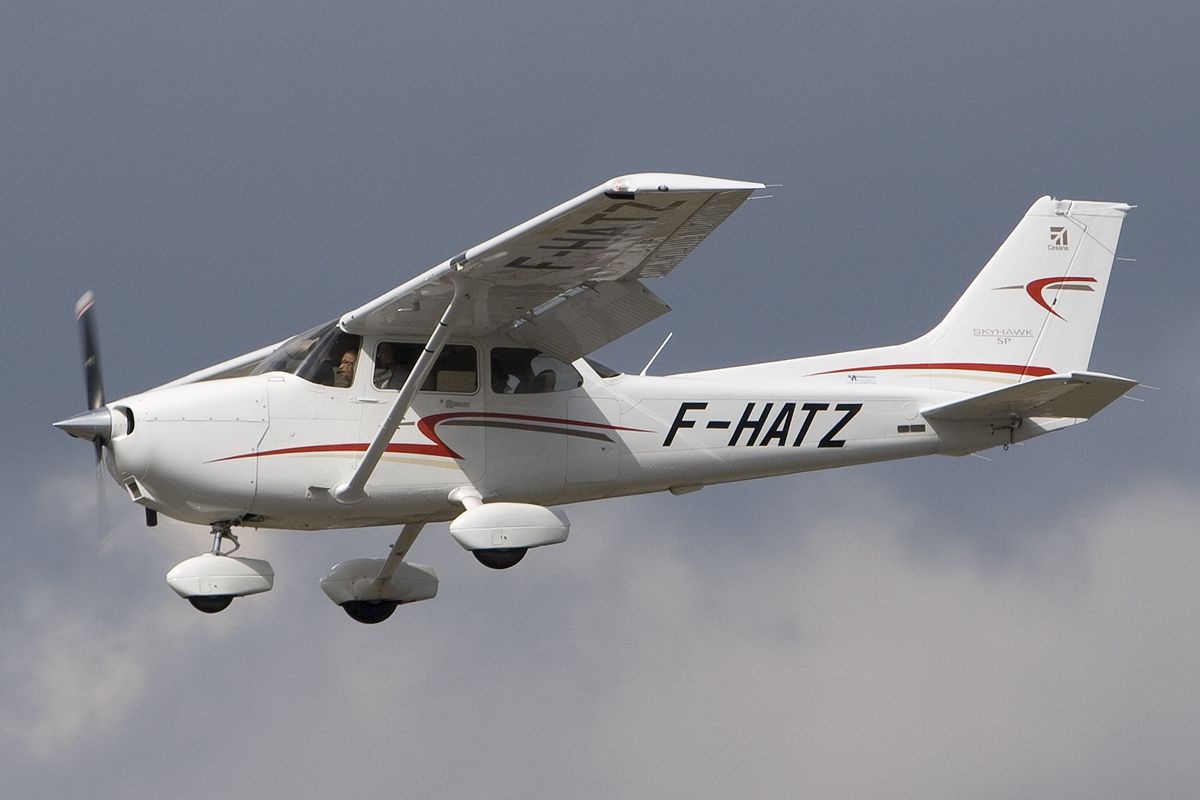
- Fly it in X-Plane 12 in a Cessna 172. The lesson loads, you turn left then right, and you get a scored debrief.
Fly
- Book a CFI to fly the same turns in a real airplane. Your sim record goes with you.
02Focus and Word Wall
- Roll, Yaw, & Pitch
- Curved flightpath
- Yaw cancelled
- Relative to Earth
- Perceive, Process, Perform
03Inside this lesson
- 01Read the briefingWhat a medium-bank turn is and the four inputs that make it work.Learn3 min
- 02Check your controllerCenter the yoke or stick. Confirm rudder and trim respond.Learn1 min
- 03Fly NowX-Plane 12 loads the Cessna 172 at 7,500 ft, level at 93 knots. Trim for level flight.DoSetup
- 04Turn left 180°Roll to 30° of bank, hold it, roll out on the new heading.Do30 sec
- 05Turn right 180°Same turn the other way, back to your starting heading.Do30 sec
- 06See your scoreBank, altitude, airspeed and rollout heading against the standard, with one thing to fix next.DoDebrief
04Objectives
- Roll into about 30° of bank smoothly and hold it.
- Hold altitude within 100 ft using back pressure and, if needed, a little power.
- Keep the turn coordinated with rudder (yaw cancelled).
- Roll out on the new heading within 10°.
05Briefing
The technique, in order
- Look outside. Clear the area, pick a landmark on the horizon and keep your eyes up. Glance at the instruments, do not stare.
- Roll in. Ease the yoke or stick left (or right) and add a little rudder in the same direction.
- Add a little back pressure as the bank builds. The nose wants to drop in a bank. Keep the horizon in the same place on the windshield.
- Use rudder to stay coordinated. The ball stays centered, yaw cancelled.
- Hold 30° of bank and cross-check altitude and airspeed. Add a little power if the airspeed drops.
- Roll out early. Start rolling out about half the bank angle before your target heading. At 30° of bank, that is about 15° early.
Most common errors
- Losing altitude in the turn. Not enough back pressure as the bank increases.
- Bank creeping steeper than 30°. Eyes on the landmark, not the bank angle. Level the wings a bit and check.
- Skidding or slipping. The ball is off center because rudder was forgotten or overdone.
- Rolling out late. Waiting until you are on the heading means you roll through it.
06Standards
| Measure | Standard |
|---|---|
| Bank angle | 30° ±5° |
| Altitude | ±100 ft |
| Airspeed | ±10 kt (target 93 KIAS) |
| Rollout heading | ±10° |
Medium-bank turns are not an ACS task. These tolerances match the ACS steep turn standard so the skill carries forward.
07Postflight probe
“Starting from level flight, describe what your hands, feet and eyes do to fly a 30 degree left turn and roll out on your heading.”
Draft probe. Record C in the postflight when the answer names a mechanism, such as back pressure to hold the nose up or rudder to cancel yaw.
+Sources
1Airplane Flying Handbook (FAA-H-8083-3)Basic flight maneuvers, turns: shallow, medium and steep bank.Thrustmaster Academy is delivered by Community Aviation. Thrustmaster is a trademark of its owner.